
For decades, the mountains of Uraga remained one of Ethiopia’s best-kept coffee secrets. Despite possessing exceptional conditions for growing arabica, the area remained largely isolated due to difficult access and limited infrastructure. While neighbouring regions steadily built international reputations, much of Uraga’s coffee never reached the global specialty market.
Today, improved road access and increasing investment have transformed the region. Areas like Gogogu have become home to new washing stations and ambitious farming communities, revealing coffees of extraordinary quality. At elevations between 2,000 and over 2,400 metres, Gogogu is quickly establishing itself as one of Guji’s most exciting origins.
Only in recent years has Gogogu become recognised by specialty buyers around the world. Although coffee has been cultivated here for generations, the region remained largely disconnected from export markets until improved infrastructure encouraged producers and exporters to establish washing stations throughout Uraga.
Today, Gogogu represents one of the newest frontiers of Ethiopian specialty coffee. The combination of exceptional altitude, fertile volcanic soils and a cool mountain climate creates ideal growing conditions for coffees with remarkable elegance and complexity.
Coffee around Gogogu grows between 2,000 and 2,400 masl, among the highest elevations found anywhere in Ethiopia. Warm days, cool nights and a temperate climate slow the maturation of coffee cherries, allowing sugars and aromatic compounds to develop gradually over time.
The result is dense beans with exceptional sweetness, vibrant citrus acidity, refined floral aromatics and the tea-like elegance that has made Uraga increasingly sought after by specialty roasters.
The same altitude that defines Gogogu’s cup profile also determines its harvest calendar.
While many southern Ethiopian regions begin harvesting in November, cherries around Uraga ripen considerably later. Harvest typically extends from December through February, making it one of the latest coffee harvests in southern Ethiopia.
This prolonged growing season contributes to the dense bean structure and concentrated flavours that distinguish the region’s coffees.
Few people have shaped modern Guji coffee as profoundly as Tesfaye Bekele.
Known internationally for founding Suke Quto, one of Ethiopia’s pioneering specialty coffee estates, Tesfaye has spent decades championing both coffee quality and environmental conservation. Yet his work in Gogogu represents something even more personal.
It is a return to where his own story began.
Before becoming known for coffee, Tesfaye worked for the Ethiopian government on environmental conservation projects throughout Guji. Following devastating forest fires during the late 1990s, he became involved in restoring native forests and protecting the region’s unique ecosystems.
He also contributed to constructing the road connecting Shakisso Town with Uraga, an infrastructure project that fundamentally changed the future of the region.
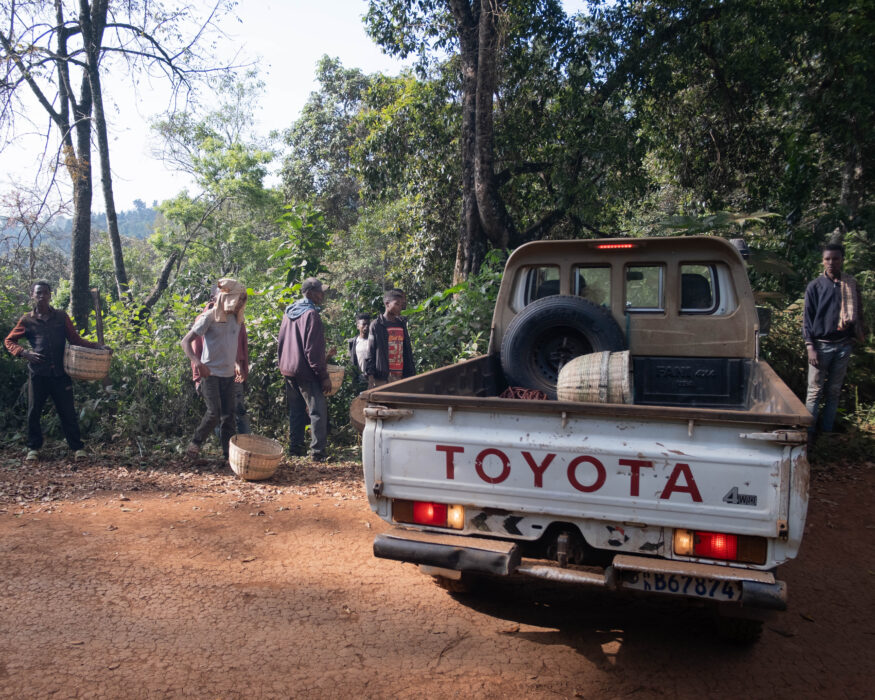
Driving that road today, Tesfaye reflects on the transformation. “Back then, there was nothing here,” he says. “Now there is more life here. I just hope people continue to respect the forests that make this place so special.”
While Suke Quto continues cultivating coffee on its own estate farms, Tesfaye’s operations in Uraga focus entirely on collaboration with local farming communities.
Rather than producing estate coffee, the Dida Hora and Wate Musuka washing stations purchase cherries from surrounding smallholders before processing them according to the same quality standards that established Suke Quto’s international reputation.
For Tesfaye, the area is more than business. Born and raised in Uraga, with his mother still living in the area, Uraga represents a homecoming and an investment in the future of his community.
Where producers in Yirgacheffe often cultivate less than one hectare, farmers around Gogogu commonly manage around 2.5 hectares.
Lower population density, historically lower land prices and relatively recent agricultural development have created room for larger family farms. These larger holdings allow coffee to become a genuine long-term livelihood rather than simply a supplementary crop.
Alongside coffee, many households cultivate enset (false banana), one of southern Ethiopia’s most important food crops.
Each washing station partners with approximately 350 smallholder farmers, while employing around four permanent staff and more than seventy seasonal workers during harvest.
Many producers see specialty coffee as an opportunity to build sustainable livelihoods for future generations. Combined with improving infrastructure and increasing market recognition, Uraga has become one of Ethiopia’s fastest-developing communities.
Unlike many coffee-gorwing areas that cultivate a mix of Kurume, Wolisho, Dega, other local landraces and JARC varieties, farmers throughout Uraga predominantly cultivate Kurume.
Kurume produces relatively small, dense beans that perform exceptionally well at high altitude. The variety is recognised for contributing vibrant florals, lively acidity, concentrated sweetness and refined tea-like characteristics that have become synonymous with the finest coffees from Uraga.
Protecting the landscape has always been central to Tesfaye’s philosophy.
The volcanic soils surrounding Gogogu support diverse native forests that play an essential role in coffee production. Shade trees improve soil fertility, regulate temperatures and create habitats for wildlife.
Common indigenous species include:
The surrounding forests are also home to abundant birdlife and Colobus monkeys, making Uraga one of Guji’s richest ecological landscapes.
Alongside distributing improved coffee seedlings through local nurseries, Tesfaye actively promotes planting indigenous tree species throughout the region.
Travelling with him quickly becomes an ecological lesson. Almost every stop along the road is accompanied by an explanation of how different tree species improve soils, retain water, enrich biodiversity and create healthier environments for coffee cultivation.
His ambition extends beyond producing exceptional coffee. It is about ensuring future generations inherit healthier forests than those of today.
Freshly harvested cherries are selectively delivered to either the Dida Hora Burqa or Wate Musuka washing station.
Using Agard disc pulpers, cherries are depulped before undergoing 36–72 hours of fermentation in clean water tanks. Fermentation time is adjusted according to ambient temperatures throughout the harvest, while much of the processing water is collected from seasonal rainfall.
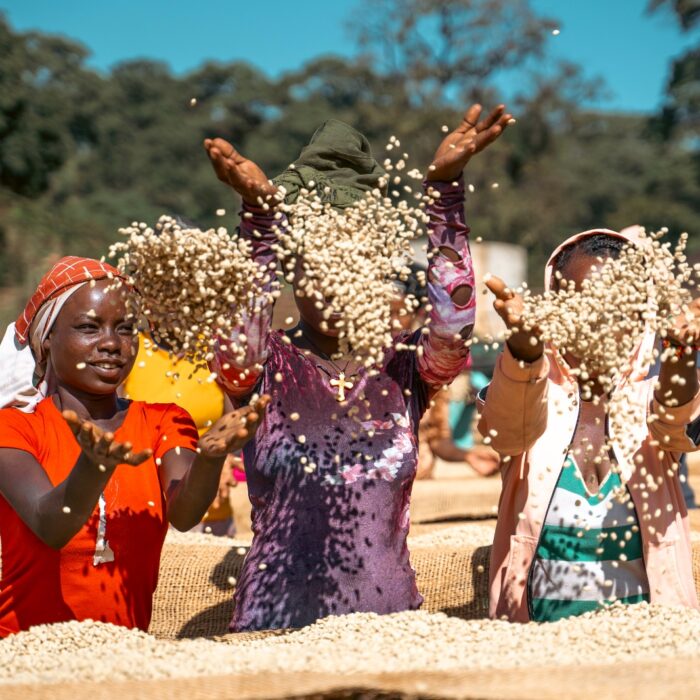
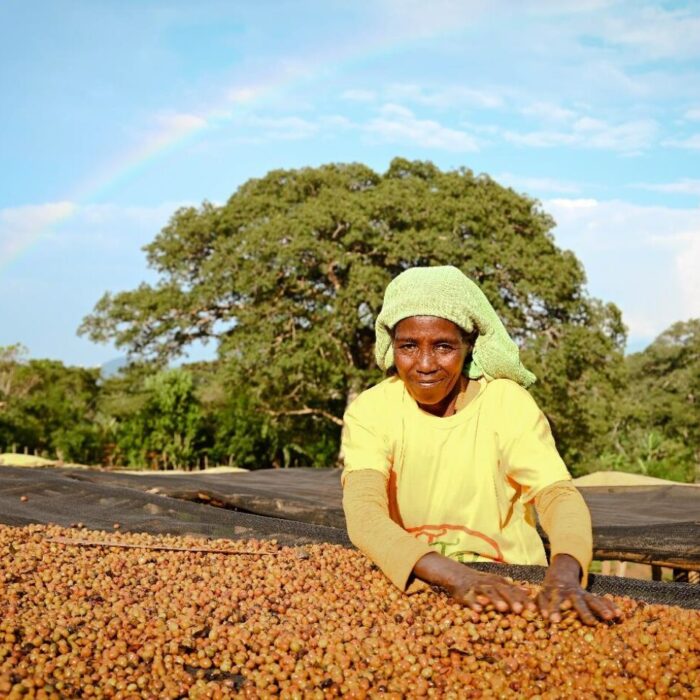
Following fermentation, parchment coffee is thoroughly washed, graded and dried on raised African beds for 13–15 days, with continuous turning to ensure even moisture reduction and preserve clarity in the cup.
Beginning with the 2025-26 harvest, Tesfaye also operates his own dry mill in Addis Ababa.
Controlling milling, grading and export preparation gives him greater flexibility to optimise quality while ensuring every lot receives meticulous attention through the final stages of production.
Compared with Ethiopia’s legendary coffee origins, Uraga remains relatively new on the international specialty coffee stage. Yet its extraordinary altitude, volcanic soils, dedicated farming communities and producers like Tesfaye Bekele have quickly established the region as one of Guji’s most promising coffee landscapes.
Having helped build the road that first connected Uraga with the outside world, Tesfaye has now returned to help shape its coffee future.
For him, success is measured by more than exceptional coffee. It is about creating opportunities for farming communities, protecting native forests and ensuring that one of Ethiopia’s newest specialty origins develops without losing the natural beauty that makes it so extraordinary.